In most US states, you can start a handyman business without a contractor license. Here’s what work you can legally take on, how the limits vary by state, and how to set up your business in 9 steps.
Key takeaways
- Most states let handymen work unlicensed if jobs stay under the dollar limit, avoid licensed trades, and need no permit.
- Dollar limits vary widely, usually cover labor plus materials, and cities may add rules, so check before quoting.
- States catch unlicensed handymen through stings targeting ads and bids, so overstepping risks heavy fines and jail.
What's the first thing that comes to mind when you hear "undercover sting"? Johnny Depp in Donnie Brasco? Leonardo DiCaprio in The Departed?
In September 2026, California’s Contractors State License Board had a different target in mind: contractors.
Over two days in Arroyo Grande, the board and the San Luis Obispo County District Attorney’s Office ran a sting targeting unlicensed contractors. It's reported that six people received court notices for bidding on jobs above California’s $1,000 limit for unlicensed work, including a $40,000 landscaping bid. They may also face charges for illegal advertising.
That’s why it's important to know exactly what you can do without a license. The good news is that you can start a handyman business without a contractor license in most US states.
This guide has you covered.
First, I'll cover what you can legally do as a handyman and what happens if you cross the line. Then I'll walk through how to set up your business.
What can a handyman do without a contractor license?
In most US states, a handyman can do small repairs and maintenance jobs without a contractor license, as long as each job stays under the state's dollar limit, doesn't involve a licensed trade like electrical or plumbing, and doesn't need a building permit.
But where that line sits for you depends on the state you're working in.
Before we get into the jobs that you can take on as a handyman, here are three rules to determine if you need a contractor license or not. I'll use California as the example.
Know your state’s dollar limit
Most states cap the value of a job you can take on without a license. In California, that cap is $1,000, and it covers the whole job – including labor and materials – not just your time. So if you're working in California, make sure that you're keeping quotes for everything on a job under the $1,000 threshold.
Here’s how that looks on two separate quotes:
Job A: Mount shelves and patch drywall
- Labor $450
- Materials $220
- Disposal $60
- Total $730 ✅ Under the limit, so no license needed
Job B: Replace interior doors and hardware
- Labor $600
- Materials $380
- Disposal $70
- Total $1,050 ❌ Over the limit, so this job needs a licensed contractor
Your labor on Job B is only $600, but the materials and disposal push the total past $1,000.
The dollar limit varies state by state, and some states have no threshold at all. Check your state's limit before you quote, not after.
Regulated trades need their own license
Electrical, plumbing, and HVAC work usually require a trade license regardless of job size. While swapping a light fixture might take just five minutes, in many states this is classed as "electrical work."
Keep in mind that a small job can still be a licensed job.
Extra triggers
While staying under $1,000 for a handyman job in California meets one requirement, it doesn't cover you completely. If the job needs a building permit, or if you hire workers, you still need a contractor license. Structural work is another common trigger, since it affects the safety of the building.
If a job needs a permit, a crew, or touches the structure, assume you need a license until you've confirmed otherwise.
Handyman jobs you can (usually) do without a contractor license
Repairs, painting, mounting, and minor carpentry usually don’t need a contractor license. New wiring, plumbing changes, gas, HVAC, and structural work usually do.
Here’s an overview of the most common jobs, including the gray areas where your state’s rules decide.
| Usually fine | Gray area: check your state | Needs a license |
|---|---|---|
| Drywall patching | Like-for-like light fixture or ceiling fan swaps | New circuits or wiring |
| Interior painting (see the lead paint note below) | Faucet and toilet replacement | Moving drains or supply lines |
| Furniture assembly | Garbage disposals | Gas |
| TV and shelf mounting | Tile | HVAC |
| Caulking and weatherproofing | Structural work | |
| Door hardware and rehangs | Roofing (in some states) | |
| Minor carpentry | Anything that needs a permit | |
| Fence and deck board repair | ||
| Gutter cleaning | ||
| Pressure washing |
Contractor license rules by state
Most states let you take small handyman jobs without a contractor license, but the dollar threshold varies wildly. In Washington, you can take on handyman work as long as the job is under $500. In North Carolina, that dollar limit is 80 times larger, at $40,000. And in some states, there's no cutoff at all.
States also measure the limit differently. Most set a per-job cap, some use a yearly earnings cap, and others require registration no matter how small the job is.
This table covers 11 states and their job-value threshold, extra conditions, and trades that require licensing. All information in the table is correct as of October 2026.
| State | Job-value threshold (labor plus materials) | Extra conditions (permits, employees, advertising) | Trades always licensed (activity-based) | Where to check |
|---|---|---|---|---|
| California | Under $1,000 per project | No building permit, no employee labor, and larger projects can’t be split up to stay under the limit; ads must state you’re not licensed | Any work that needs a permit, which covers most electrical, plumbing, and HVAC | Contractors State License Board (CSLB) |
| Texas | No limit | No state rules, but cities can set their own. Dallas, for example, requires contractors to register with the city before pulling a permit | Electrical, plumbing, HVAC | Texas Department of Licensing and Regulation (TDLR) |
| Florida | Under $2,500 per project | Can’t be part of a larger project; can’t advertise as a contractor | Electrical, plumbing, air conditioning | Department of Business and Professional Regulation (DBPR) |
| Georgia | License needed over $2,500 | Building departments can’t issue permits to unlicensed contractors for work over $2,500 | Electrical, plumbing, conditioned air (HVAC), low voltage | State Licensing Board for Residential and General Contractors |
| Pennsylvania | Registration needed once you do $5,000 or more of home improvement work in a calendar year | Yearly total, not per job | None statewide; some cities and towns license electricians and plumbers | Office of Attorney General |
| North Carolina | Under $40,000 per project | Permits are still required for structural, electrical, plumbing, and HVAC work, even under $40,000 | Electrical, plumbing, HVAC, fire sprinklers, fire alarms | NC Licensing Board for General Contractors (NCLBGC) |
| Washington | Under $500 per project | Can’t split jobs to evade the limit and can’t advertise as a contractor | Electrical, plumbing | Department of Labor & Industries (L&I) |
| New Jersey | No dollar exemption: all home improvement businesses must register unless specifically exempt | Contracts over $500 must be in writing | Electrical, plumbing, HVAC | Division of Consumer Affairs |
| Utah | Under $7,000 per project | Over $3,000, you must file an affirmation with the state | Electrical, plumbing, HVAC, gas appliances, fire sprinklers, alarm systems, radon mitigation | Division of Professional Licensing (DOPL) |
| Arizona | Under $1,000 per project | No building permit; every ad must include “not a licensed contractor” | Any work that needs a permit | Registrar of Contractors (ROC) |
| Virginia | License needed over $1,000 | Some counties add their own license | Electrical, plumbing, mechanical (HVAC) | Department of Professional and Occupational Regulation (DPOR) |
What about the other states?
If your state isn't in the above table, it likely falls into one of these four groups:
- Other states with a per-job limit. Many states follow the same model as California, but with a different threshold. Nevada and Oregon both sit at $1,000, Rhode Island is under $500 for casual, minor work, and Michigan requires a license for residential work of $600 or more. At the higher end, Alabama only requires a license for residential work over $10,000, and West Virginia’s limit is under $5,000 for residential work.
- States that measure yearly earnings. Like Pennsylvania, a few states look at how much you earn in a year rather than the size of each job. Iowa requires registration once you earn $2,000 or more a year from construction, Connecticut once you charge more than $1,000 in home improvement contracts in any 12 months, and Minnesota exempts you if your gross annual receipts don’t exceed $15,000.
- States with no dollar exemption. Like New Jersey, some states require registration or a license for almost any paid work. In Alaska, all construction contractors must register and be bonded regardless of job size, and in Delaware, every contractor needs a business license from the Division of Revenue.
- States with no state license for general work. Like Texas, states such as Colorado, Illinois, Ohio, and New York leave general contractor licensing to cities and counties. Your state may not care about a $3,000 deck repair, but your city might.
Check your state contractor board and your city or county before you quote on anything.
EPA's Renovation, Repair and Painting (RRP) Rule
There's one federal rule most new handymen miss: if you're sanding, scraping, or cutting into paint in a home built before 1978, the EPA's Renovation, Repair and Painting (RRP) Rule may apply, because the paint could contain lead.
Firms taking on renovation work for pay in pre-1978 housing and child-occupied facilities need EPA certification and must follow lead-safe work practices, whether or not the state requires a contractor license.
Small jobs can be exempt. According to the EPA, small jobs are defined as work that disturbs 6 square feet or less of interior painted surface in a room, or 20 square feet or less on the exterior. If the job meets these measurements, it counts as minor repair and maintenance. But window replacement and demolition of painted surfaces are never exempt, no matter how small the size of the job.
Do states really go after unlicensed handymen?
Yes, they do. And it's not just through auditing. Remember Arroyo Grande? The six people cited were caught in an undercover sting, and the $40,000 landscaping bid that got flagged was simply a quote they offered. They had not even started the job.
California isn’t the only state doing this. In 2025, Texas’s licensing agency ran a sting that turned up 74 potential violations, mostly against unlicensed electricians and air conditioning and refrigeration contractors. Investigators found them simply by contacting people who advertised those services.
If you’re advertising, you’re findable. And getting caught is expensive. In California, the minimum fine for unlicensed contracting rose from $200 to $1,500 per violation in July 2026, with a maximum of $15,000. Unlicensed contracting can also mean up to six months in jail.
I spoke with Peter Crumb, handyman, builder, and renovator with more than 35 years of experience running his own business.
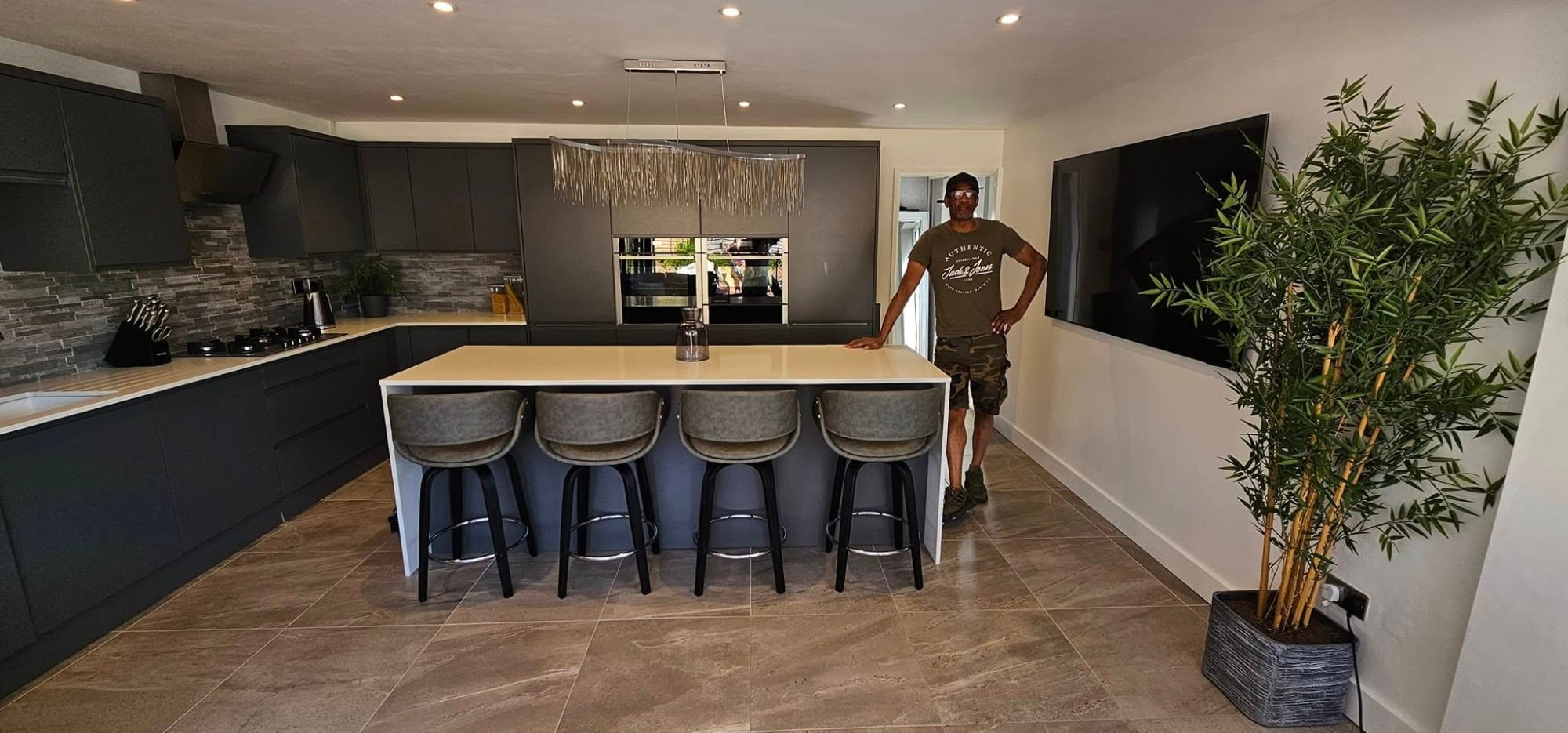
Here's what he says about working outside of your lane:
"Working outside of your lane is a huge risk. If you get caught doing work that requires a license you don’t have, you get severely punished, and it’s not just you. I won’t touch anything to do with gas. I know of someone who was hit with a huge fine and community service for installing a gas boiler without the right qualifications.
And it’s not just about the fines and punishments. If you start doing work you aren’t qualified for, you can’t be certain you’re doing it correctly. Regulations can change every year, too, so you need to stay on top of them no matter how many years you’ve been in the industry."
When it’s worth getting a contractor license anyway
If you're regularly turning down work because it's over your state's limit or needs a permit, then it's probably time to get licensed. As a licensed contractor or tradesperson you can take on bigger jobs at higher prices, build credibility with homeowners, and grow your business.
For Peter, expanding beyond smaller jobs changed what he could offer clients:
"People want one person to come into their house and be responsible for everything to do with a renovation. They don’t want an electrician doing one thing, a carpenter doing another, and a flooring installer doing something else.
Too many people means too many places things can go wrong. When you’re qualified across multiple trades, you can foresee the problems in the job, which speeds everything up."
How to start a handyman business in 9 steps
Now that you know how to legally start a handyman business, here's how to set it up.
1. Pick your services
Start by listing the jobs you're good at (or think you could easily learn), then check if you can legally offer that service.
From there, start with a focused offer rather than trying to do everything on day one. A niche like TV mounting is a good example. It's easy to start, needs only a small set of tools, and is simple to explain and quote. Plus, as you'll be getting reviewed on the same service, you can build a reputation faster and become known as the local TV-mounting expert. As your skills grow you can widen your services.

Sina Omosowon is a good example of how far a simple niche can go. He started his TV-mounting business, Shine, in 2019 as a side hustle to help put himself through school and support his family, getting trained on the basics and building the business from there. About six months in, he was seeing consistent monthly revenue, and today the business brings in about $30,000 a month.
2. Check your state and local rules
Decided on your service business? Before you take your first paid job, confirm the rules where you'll be working. Start with the state table above to find your dollar limit and which trades need their own license, then check your state contractor board’s website for the latest details, since limits and rules can change.
But don’t stop at the state level. Your city or county may have its own requirements, like a local business license, contractor registration, or permit rules, even if the state doesn’t regulate handyman work at all.
3. Register the business
Next, decide how you're structuring your business. Most handymen start out as a sole proprietorship or form an LLC. Here's what each of those means:
- Sole proprietorship: This is the simplest route. If you're working under your own name, there's usually nothing to file at the state level. The downside is that there's no legal separation between you and the business, so your personal assets aren't protected if something goes wrong on a job.
- LLC: An LLC creates a legal separation between you and your business. It doesn’t automatically lower your taxes, but it gives you more flexibility in how your business is taxed as it grows. For a business that works inside people’s homes, that protection is worth considering. Just remember that an LLC doesn’t replace insurance or licensing.
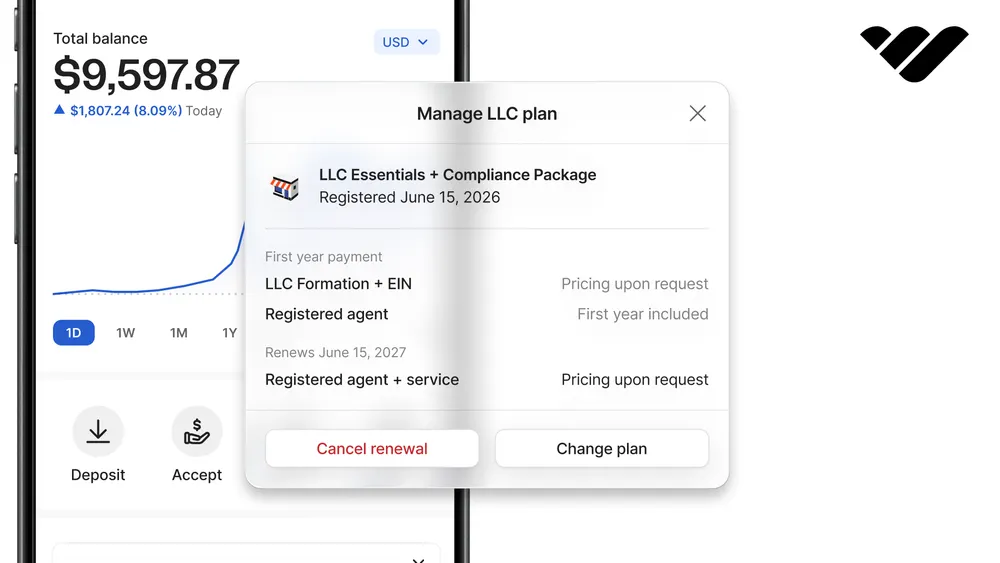
You'll also need an EIN – an Employer Identification Number. This is like a Social Security number for your business. You’ll need one to open a business bank account, file taxes, or hire employees. If you register your LLC through Whop, it’s included. If you’re a sole proprietor or forming your LLC another way, you can get an EIN directly from the IRS for free.
Don't forget your local business license. Many cities and counties require a general business license to operate, even if your state doesn’t license handyman work. Check with your city or county clerk’s office before you start taking jobs.
4. Get insured
Picture this: you're mounting a client's brand-new $5,000 TV. The job pays a couple of hundred dollars, and if that TV slips or the mount fails, you could be on the hook for the full cost of the TV, plus any damage to the wall and floor. That's the risk for handyman work – the jobs are small, but the things you're working on (and around) are often expensive.
That's why it is crucial to be fully insured. Get this covered in order:
- General liability: Covers damage to a client’s property and injuries caused by your work. This is the one to get first.
- Commercial auto: Covers the vehicle you use for work, since personal auto policies may not cover business use.
- Workers’ compensation: Covers employees who get hurt on the job. You’ll need it once you hire (if you're allowed to hire), and the rules vary by state.
- Tools and equipment insurance: Covers lost, stolen, or damaged tools, whether they’re in your vehicle, on a job site, or in storage. Handyman businesses pay an average of $42 per month, or $505 annually, according to Insureon.
At one point in his decades-long career, Peter worked as a tradesperson for a local housing authority, where he saw firsthand how a tiny detail can turn into a major claim.
A woman living in one of the authority’s properties was getting ready for a night out when her stiletto heel caught in a gap between the floorboards. The gap was less than half an inch wide. "It’s normal in houses for floorboards to shrink over the years," Peter explains. But the heel caught, and it snapped her ankle.
The housing authority was found at fault because of the gap, and its insurance had to pay a large amount of compensation. If that had been a sole proprietor without insurance, they could have lost their house and everything they owned because of one tiny mistake. "Insurance is paramount," he says.
And if you want to work for property managers, most will ask for a certificate of insurance showing policy limits of $1 million per occurrence and $2 million aggregate, which is a standard handyman policy. Your insurer can usually issue one quickly.
5. Set your pricing
There are two main ways to price handyman work, and most handymen end up using both.
- Hourly rates work best when it's hard to predict how long a job will take, like repairing a rotted fence or deck board, where you won’t know how much damage there is until you start pulling boards up. The client pays for your time, so you’re covered if the job runs long.
- Flat rates work best for jobs you do often and can estimate well, like assembling a specific piece of furniture. Customers like knowing the price upfront, and as you get faster, you make the same amount of money for less time.
Whichever you choose, keep a close eye on material costs. For Peter, researching them is a big part of every quote. "Material prices change on a weekly basis, up or down, and it can kill or change the whole profit on a job," he says.
Quotes also take real time to put together, and that work isn’t always rewarded. "I’ve seen a lot of handymen give out a written estimate, only for the customer to pass it on to the next handyman to try to get a better price," Peter says. "And you’re the one who has done all the hard work putting together a quote over a couple of days."
So no matter which pricing model you choose, be sure to work out the true hourly rate you need to make a profit. Here's a simple way to do it:
- Pick your target annual income before taxes, say $50,000.
- Add your yearly business costs, like insurance, fuel, software, and replacing tools. For this example, let's say $7,000.
- Estimate your billable hours. Driving, quoting, and buying materials eat into your week, so a solo handyman might realistically bill 25 hours a week. Over 48 working weeks, that’s 1,200 hours.
- Divide your income and costs by your billable hours: $57,000 ÷ 1,200 = $47.50 an hour.
That’s the minimum you need to charge just to hit your target, which is why many handymen charge more.
Finally, make sure your quotes stay within your state’s limit for unlicensed work, and check whether materials count toward that figure. In most states, they do.
6. Put every job in writing
Even if you're doing low-cost jobs, you still need to act like a big business. A written agreement protects both you and your client. Before you start any job, write down:
- Scope: Exactly what you’ll do.
- Price: The total cost, and whether it’s hourly or flat rate.
- Exclusions: What’s not included, so there are no surprises.
- Change orders: How extra work will be handled if the client asks for more.
In some states, it’s also the law. In New Jersey, for example, home improvement contracts over $500 must be in writing.
Peter learned the value of this the hard way. "In the past, I’ve had clients ask me why I didn’t do certain jobs that we had never agreed to," he says.
Now, he gives every client an itemized, printed list of the work, "even the smallest, silliest points," along with a note that anything outside the list will be discussed and priced before it begins.
He also plans for problems before they happen. With years of experience, he can often spot what might go wrong, so he writes those possibilities into the quote, along with what they’d cost if they come up. "This way, the customer knows the true cost if there are any issues to overcome, and it gives them peace of mind," he says. "If there’s no problem, that’s great. The work is faster and cheaper. If there is a problem, we’ve already prepared to have the conversation."
Keep in mind that extra requests count toward your state’s limit, too. In Utah, for example, the exemption covers jobs under $7,000, including labor and materials and all changes or additions to the agreed work.
7. Set up how you’ll get paid
Decide how you'll handle payments before your first job, so you're not chasing money afterward or fumbling on the spot.
For bigger jobs, take a deposit that covers your material costs and confirms the client's commitment. Make sure that your invoice matches your written agreement, listing the work you did, the price, and when payment is due.
If you can, take payment on the spot – just remember that not everyone has cash on hand, so set up tap to pay.
Whop is the end-to-end platform for building a business, and it gives you the tools to handle payments from one dashboard.
When a client books, you can send a one-time checkout link for the deposit, or set up a split payment link, where each payment is automatically charged on a schedule until all installments are completed.

When the job’s done, you can create an invoice in a few seconds and let clients pay by card, ACH, PayPal, and more. And if a client forgets, Whop sends invoice reminders at set intervals once the invoice passes its due date, so you don’t have to chase them yourself.
Once money starts coming in, set aside part of every payment for taxes. As a self-employed handyman, you’re responsible for the whole 15.3% federal self-employment tax on top of income tax, and you’ll generally need to make quarterly estimated payments if you expect to owe $1,000 or more in tax.
Keep a separate business bank account, save receipts, and log your work miles, since business expenses can lower your tax bill.
P.S. Whop Tax Service can help here, too.
8. Get a website and a Google Business Profile
Even if you find most of your work through local community connections, you still need a website. Most clients will look you up online before they call, so you need somewhere to send them. It doesn't have to be complicated – just a landing page that shows what you do, where you are, and how to book is enough to build trust.
A website and Google Business Profile are also great for local SEO: they help you show up when people nearby search for a handyman.
To show how quick and easy this can be, I built a website for Peter using a Whop blueprint. He was previously only using business cards, a Facebook page, and word-of-mouth – if he had already had a website, I would have moved it to Whop with Whop migrations instead.
First, I headed to the Whop Blueprints page and browsed through the existing blueprints. A blueprint isn't a page design or a theme – it's a business that's already running, so taking one live copies the products, their pricing, and the website that sells them.
I found one for a landscaping business that seemed like a good fit, so I applied it.
Once I applied the blueprint, the site was ready to edit.
This was incredibly easy to do – I wrote plain-language prompts into the Whop AI chat on the sidebar and watched as Whop applied the changes in real time.
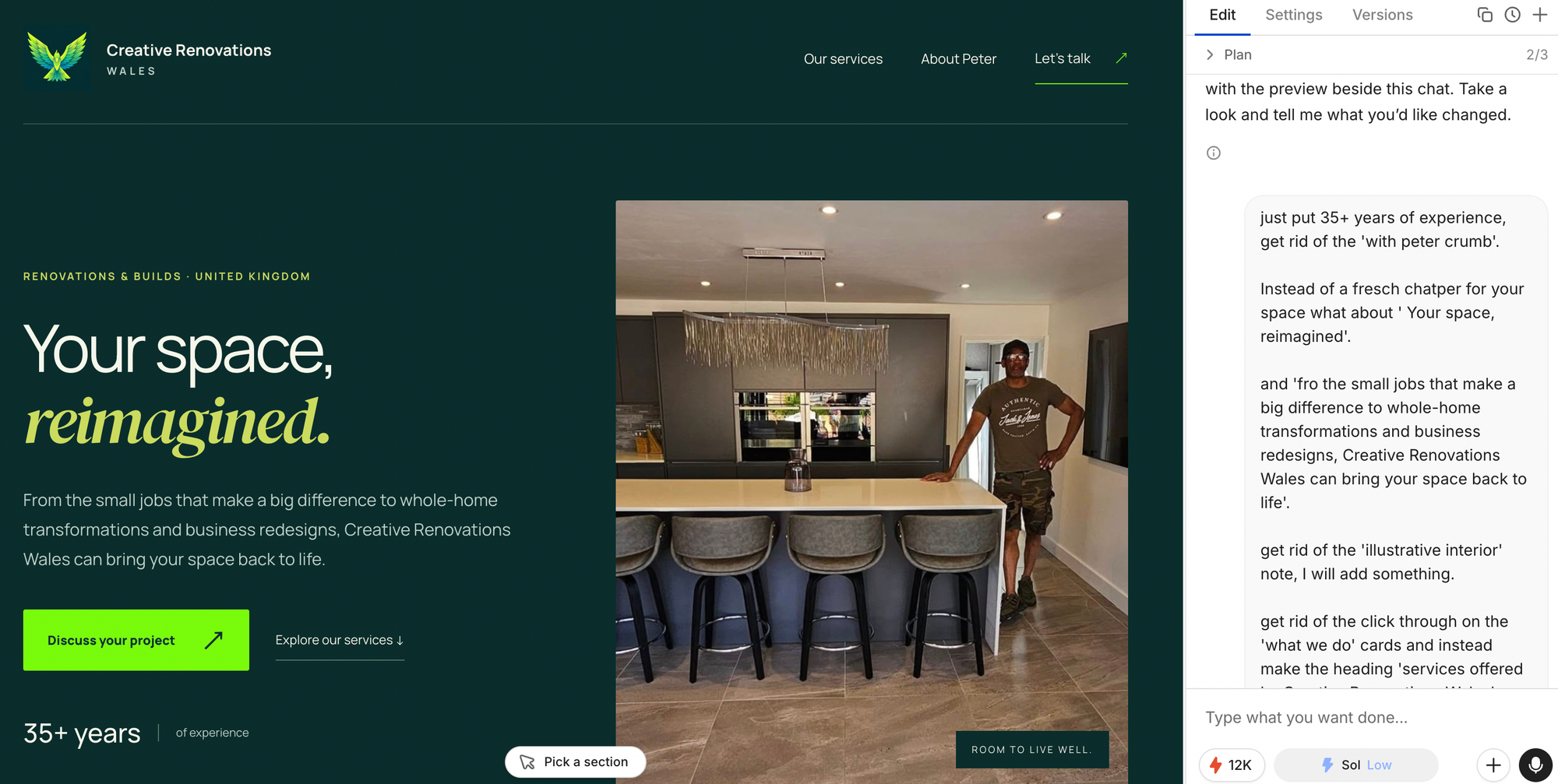
Now Peter had a website with a services page and an "about" page – great for both local SEO and for showcasing his experience.
I wanted to also add a gallery that showed his completed work.
There were a few kinks to iron out on the descriptions of the photos, but that took just a minute or so to rectify – all I had to do was click on "pick a section" then write the changes I wanted into the chat on the sidebar. Finally, I published his site.
The entire website took around 20 minutes to make.
All that was left to do was fix up the website description in settings.
9. Start advertising
Your first customers will probably come from people you already know, so tell friends, family, and neighbors what you’re offering. Then set up your Google Business Profile, share your services on Nextdoor and local Facebook groups, and reach out to realtors, property managers, and landlords, who often need steady help with repairs.
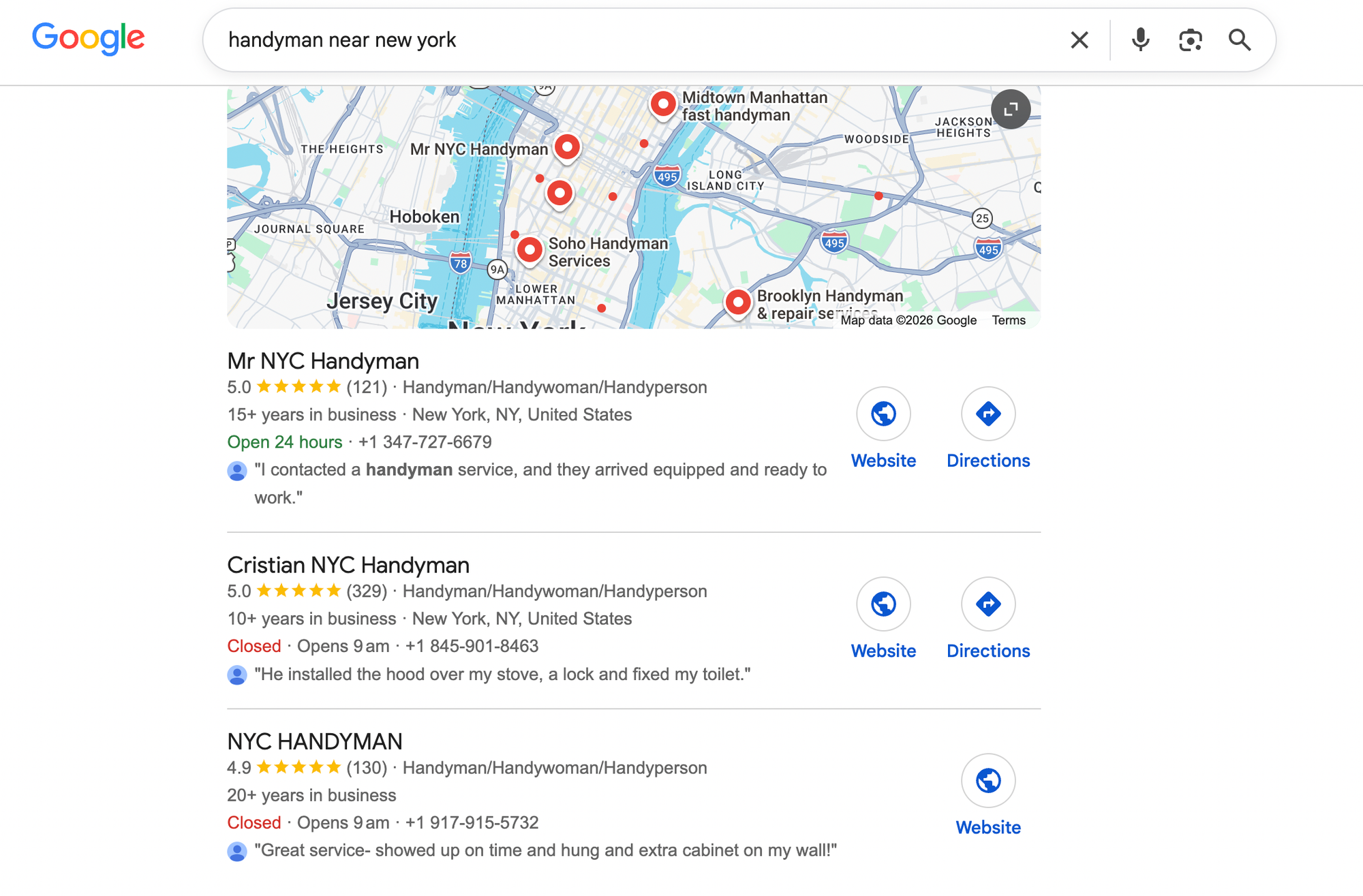
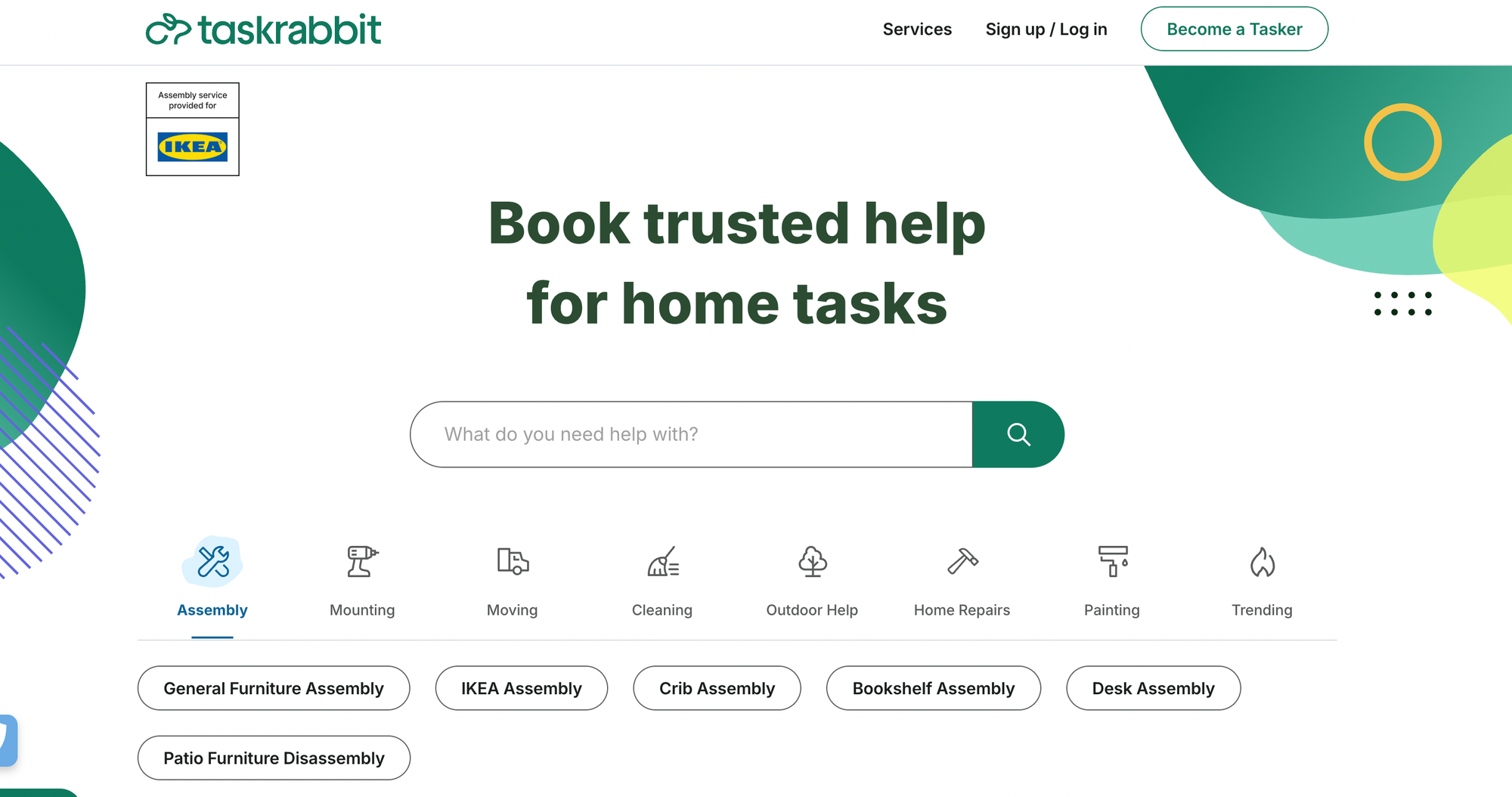
Many US-based handymen also find their first paid jobs on Thumbtack, Angi, and TaskRabbit.
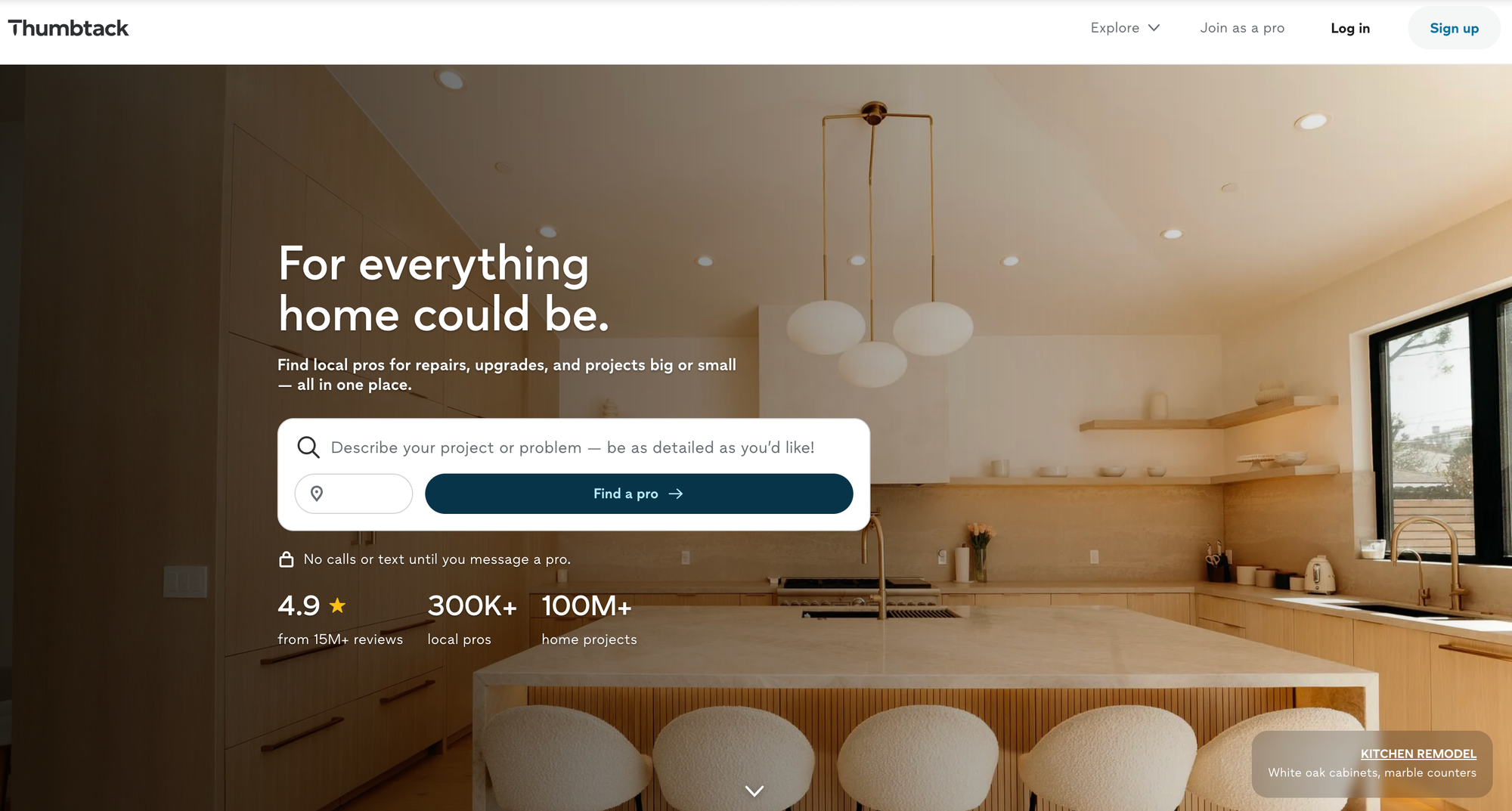
But be aware that on Thumbtack and Angi, you’re charged when you access a lead, even if it doesn’t convert, so respond fast and track what you pay per booked job.
Thumbtack doesn’t publish its prices, but pros across the platform report costs ranging from $10 to over $100 depending on trade, job size, and market, with small handyman jobs at the lower end. On TaskRabbit, you set your own hourly rate and keep 100% of what you charge, plus tips.
Because you pay for leads you don’t win on Thumbtack, the number that matters is your cost per booked job. Say you pay $25 each for 10 leads and book three of them. That’s $250 spent, or about $83 per job, so on a $150 TV mounting job, more than half of what you charged went to getting the work.
So responding fast and building reviews bring that cost down. Sina Omosowon, who runs the TV-mounting business Shine, told Entrepreneur that he always kept his phone on him so he could answer questions and book jobs as soon as requests came in. He also registered on Thumbtack and built up reviews from his completed jobs, and now has over 2,000 reviews on the platform. He got so efficient that he can now mount a TV in 15 minutes.
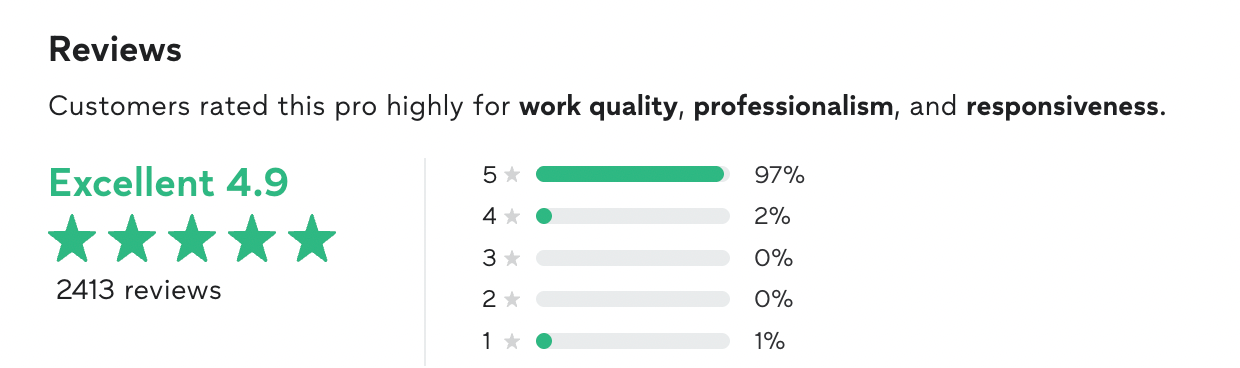
Remember – wherever you advertise, follow your state’s rules. In California, ads for unlicensed work must state that you’re not licensed, and in Arizona, every ad must include "not a licensed contractor." Never list services you can’t legally perform.
To reach beyond your network, Whop Ads lets you run paid ads on networks like Meta directly from your Whop account, and you can target an audience by location, so your ads only reach people in your service area.
As jobs come in, reviews will become your biggest growth engine. Ask for one at the moment of payment, while the client is happy with the work, and share before-and-after photos – only with the client’s permission.
For Peter, social media has become a major source of work. "I recently shared a video of a new service, and within a few hours of posting, I had four leads," he says.
But he hasn’t forgotten where he started. "A lot of my work comes from word of mouth. Everyone wants a recommendation they can trust. Just make sure you have the website to back it up and look official."
Your first 30 days
You're now ready to start running your handyman business! Here's how to hit the ground running:
- In your first week, pick three services that you can do with tools you already own, set up your website and profiles, and get insured. Make sure to ask your insurer for a certificate of insurance, because many property managers need one before you can work for them.
- Tell everyone you know that you're open for business, and reply to every request fast. For your first few jobs, consider offering a small discount in exchange for a review.
- Be patient. Don't expect to be fully booked right away. Ten jobs at two hours each and $50 an hour is $1,000 in your first month, which is a good starting point.
Is a handyman business profitable?
It can be, but how profitable your business is depends more on how you price your work than how many hours you work.
According to HomeGuide, self-employed handymen charge $50-$80 an hour, while corporate handymen charge $75-$125 an hour. On top of that, many handymen set a minimum rate of $75-$200 per visit, which makes the smaller, quicker jobs worth the trip. And, if they buy the materials, they usually add a 20%-50% markup to cover their time and the cost of sourcing them.
These charges are important because not every hour you work is an hour you can bill. Let's say you take a 20-minute job that's 20 minutes away. Once you add the drive there and back, that's a full hour of your day. So if you only charge for the 20 minutes on site, your hourly rate drops by two-thirds.
Don't just charge for labor on site. Factor in the cost of fuel, time spent quoting, and sourcing materials.
How much does it cost to start a handyman business?
Starting a handyman business costs less than most businesses, especially if you already own basic tools and a vehicle.
Jobber estimates around $1,390 to $2,930+ to get started, while Handyman Startup puts it between $2,000 and $6,000, depending on how much of the process you outsource.
| Cost | Typical range | Notes |
|---|---|---|
| Tools | $800 to $2,800 | Power tools like a drill, circular saw, jigsaw, and sander run $500-$2,000, and hand tools like hammers, screwdrivers, wrenches, and pliers run $300-$800. |
| Vehicle | $0 if you already own one | Most handymen start with a vehicle they already have |
| Registration | $0-$500 | Forming an LLC with Whop is $500 for the first year, including your EIN registration, state filing fees, and registered agent. Sole proprietors can get an EIN free from the IRS. Local business license fees vary by city |
| Insurance | About $978 a year | Handymen pay an average of $81 per month, or $978 per year, for general liability insurance. Commercial auto adds an average of $188 per month, or $2,252 per year, if you need it |
| Website and marketing | $150-$2,000 | Jobber estimates $150 for a DIY website and business cards, while a professionally built site costs more |
| Software | $0-$75 a month | Handyman Startup estimates $0 to $75 for software, mainly for accounting and estimating |
| Working capital | Varies | A cash buffer to cover fuel, insurance payments, and materials while you build up regular clients |
Figures in this table are drawn from industry guides by Jobber, Handyman Startup, and StartCosts, insurance data from Insureon, and Whop’s LLC pricing, and are correct as of October 2026.
You can keep costs down by starting with services that use tools you already own, then renting or buying specialist tools as jobs come in.
And, instead of paying for separate tools to run your business, you can use Whop to build your website with a blueprint, run local ads with Whop Ads, and take payments, all from one dashboard.
Peter’s advice is to resist buying every new tool on the market. "I’ve wasted so much money chasing new inventions in tooling," he says. "Invest in the basics for what you’re offering, and grow your toolbox as your business grows. Make sure you have the right tool for the right job, as that will give you such an advantage time-wise."
Build your handyman business in an afternoon with Whop and your AI
You have a plan. Here's how to build it fast. With the prompts below you can get your research done, adjust prices, and handle paperwork, and setup the website.
Whop AI is going to help you build your website and your checkout. It can also set up your deposits and invoices as well.
Start with your business brief
To start working on your business brief, use the prompt below. Keep in mind that on each prompt card you should click the fill button and answer each question.
Here are my handyman business details:
- Business name: [X]
- Service area: [neighborhoods or ZIP codes], [city, state]
- Part-time or full-time: [X]
- Services: [X]
- Tools I already own: [X]
- Tool budget: $[X]
- Target yearly income before taxes: $[X]
- Yearly business costs (insurance, fuel, software, replacing tools): $[X]
- Billable hours a week: [X]
- Working weeks a year: [X]
- Years of experience: [X]
- Phone and hours: [X]
Use these details for everything I ask you in this chat.
Plan your business with any AI
Before you manually build anything let's get some help from AI to do the research.
The four prompts you will find below give you your services and tools, your states, rules, your prices, and the job agreement so that you'll have all the details you need when we get to the step of building the website.
I’m starting a handyman business. From the services I’m considering, help me choose three to start with, using the tools I already own wherever I can. Then research current prices and build an Excel spreadsheet of any tools I still need, with columns for: service, tool, budget option and price, pro-grade option and price, where to buy (with clickable links to local dealers, used listings, and manufacturer pages), and whether to buy new, buy used, rent, or skip for now.
- Service area: [neighborhoods or ZIP codes], [city, state]
- Part-time or full-time: [X]
- Services: [X]
- Tools I already own: [X]
- Tool budget: $[X]
Leave out electrical, plumbing, HVAC, and gas work, because those usually need their own trade license. Recommend used where it saves money, add a starter total at the bottom, and flag anything that pushes me over budget.
I’m starting a handyman business called [business name], serving [neighborhoods or ZIP codes] in [city, state]. I plan to offer [services]. Search official government websites and tell me:
- The most I can charge per job without a contractor license, whether materials and change orders count toward that limit, and whether any of my services need a license at any price
- Whether advertising changes any of that, and any wording my ads must include
- The business registration, city or county licenses, and insurance I’m required to have
- Whether my state requires a written contract above a certain amount
- When the EPA’s Renovation, Repair, and Painting Rule applies to my work
Link to the official page for each answer, and tell me plainly if you can’t find an official source.
Remember always click through the official pages to confirm the details. Rules can change and AI can get local details wrong.
I’m starting a handyman business, and I’ll charge both hourly and flat rates. Work out the minimum hourly rate I need by adding my target yearly income and my yearly business costs, then dividing by my billable hours a year. Include payment fees of 2.7% + $0.30 per card payment.
- Service area: [neighborhoods or ZIP codes], [city, state]
- Services: [X]
- Target yearly income before taxes: $[X]
- Yearly business costs (insurance, fuel, software, replacing tools): $[X]
- Billable hours a week: [X]
- Working weeks a year: [X]
- State limit for unlicensed work: [X]
Then give me:
- My minimum hourly rate, and the hourly rate you recommend charging
- A flat rate for each service, with the time you assumed for it
- A minimum visit charge
- A materials markup
- A deposit rule for bigger jobs that covers my material costs
- What local handymen charge, with links, and how my prices compare
Put it in a spreadsheet with formulas so I can change any input. Flag any service whose usual total would go over my state limit. If anything’s missing, ask me before you calculate. Finish with the prices you recommend.
Write a one-page, plain-English job agreement I can reuse for every handyman job. Leave blanks for the job details, and include:
- Scope: an itemized list of exactly what I’ll do
- Price: the total cost, and whether it’s hourly or flat rate
- Exclusions: what’s not included
- Possible problems: what could come up on this job, and what each would cost
- Change orders: anything outside the list gets discussed and priced before it begins
- Payment: the deposit, and when the rest is due
Here are my details:
- Business name: [X]
- Phone and hours: [X]
I work in [city, state]. Tell me if my state requires anything else in a written agreement.
Build your website with Whop AI
You have all the details. Let's get your business live. All you need is a Whop account, free to create at whop.com.
The way blueprints make your work easier is that you don't need to find the perfect blueprint for your business. You can just pick one and then ask the Whop AI to customize it to your liking.
I started Peter's site from a landscaping blueprint. For a handyman business the pressure washing business blueprint is a good place to start because it's built around the flat-price home services that customers book online.
The steps you should follow are:
- Make the same numbered list
- Copy the blueprint
- Prompt the Whop AI
- Approve the plan
- Let Whop build it
- Make changes
- Verify your business
- Publish your site
I just copied a blueprint. Customize it into a website for [business name], a handyman business serving [neighborhoods or ZIP codes] in [city, state]. Customers can book a flat-rate job online or ask for a quote on anything bigger.
Edit the site’s existing pages and keep its design. Don’t rebuild from scratch, and tell me if you can’t.
Replace all of the blueprint’s products, prices, and copy, and remove any photos, pages, or subscriptions that don’t fit a handyman business. Before you remove anything, tell me which business you’re working in and list what you’ll remove, then wait for my OK.
Create one-time checkout for these flat-rate services, and ask for the job address and a preferred date at checkout:
[list your flat-rate services and prices]
Let customers pay by credit or debit card, digital wallet, or ACH bank transfer. Charge in US dollars only, without converting prices to a customer’s local currency.
Include:
- A landing page that shows what I do, where I work, and how to book
- A services page that only lists the services above
- An about page that mentions my [years of experience] years of experience
- A gallery page for photos of my completed work
- A contact page with my phone and hours, [phone and hours], and a form for quotes on bigger jobs that asks for the job description, address, and photos
- This wording in the footer of every page, unless it says none: [ad wording my state requires]
Keep the copy short, friendly, and easy to scan. Don’t say I’m licensed, and don’t mention electrical, plumbing, HVAC, or gas work.
Once your site is live Whop AI can set up payments for you. For example:
Create a one-time checkout link for a $[deposit amount] deposit on this job: [paste the job description]. Name it so my client can see what it’s for, then give me the link to check. Don’t send anything to my client.
Create a split payment checkout link for this job: [paste the job description]. The total is $[job total], split into [number of payments] payments that charge automatically every [days between payments] days. Give me the link to check, and don’t send anything to my client.
Create an invoice for [client name and email] for this job: [paste the job description]. Bill $[labor total] for labor and $[materials total] for materials, due on [due date]. Show me the invoice before you send it.
Get your first customers
Now that your website is live and your payments are ready, let's find your first customers. They will probably come from people you already know or have worked with before, so start there.
Write three short posts announcing my handyman business: one to send to friends and family, one for Nextdoor, and one for local Facebook groups. Say what I do, where I work, and how to book, and offer a small discount on my first few jobs in exchange for a review. Keep each one under 100 words.
- Business name: [X]
- Service area: [neighborhoods or ZIP codes], [city, state]
- Services: [X]
- Phone and hours: [X]
- Website link: [X]
Add this wording to the Nextdoor and Facebook posts, unless it says none: [ad wording my state requires]
Write a short email I can send to local realtors and property managers, offering help with repairs. Give it a clear subject line, keep it under 120 words, and say that I can send a certificate of insurance. Then find 20 real estate offices and property management companies in my service area, and list them in a spreadsheet with links to their contact pages.
- Business name: [X]
- Service area: [neighborhoods or ZIP codes], [city, state]
- Services: [X]
- Insurance coverage: [X]
- Phone and hours: [X]
- Website link: [X]
Help me set up a Google Business Profile for my handyman business. Write a 750-character description, suggest my primary and additional categories, and only list the services below. Then walk me through creating and verifying the profile at business.google.com, one step at a time.
- Business name: [X]
- Service area: [neighborhoods or ZIP codes], [city, state]
- Services: [X]
- Phone and hours: [X]
- Website link: [X]
Let your AI help you with jobs you get
Here are some prompts to help you code click quickly as job requests come in. They can also help you see which lead sources are paying off and how to collect reviews.
Write an itemized quote for this job: [paste the job description]. Here are some photos: [attach photos of the job].
- Hourly rate: $[X]
- Minimum visit charge: $[X]
- Materials markup: [X]%
- State limit for unlicensed work: [X]
Look up current material prices and link to them. List what’s included, what isn’t, and anything that could go wrong, with what it would cost. Add up the total with labor and materials, and tell me plainly if it goes over my state limit or needs a license.
I pay for handyman leads on Thumbtack and Angi, whether I book them or not. Build a spreadsheet with a row for each lead and columns for: date, platform, job type, what I paid for the lead, whether I booked it, and what I charged.
Use formulas to work out my cost per booked job on each platform, and what share of each job’s price went to getting the work. Add example data so I can see how it works: 10 leads at $25 each, with three booked at $150 each. That should come out at about $83 per booked job.
Write a short, friendly text I can send a client when I take payment, asking them to leave a Google review. Keep it under 50 words, and ask whether I can share before-and-after photos of the job.
- Business name: [X]
- Client’s first name: [X]
- Job I did: [X]
- Google review link: [X]
Manage and grow your handyman business with Whop
I built Peter’s website with a Whop blueprint, but he’s not the only tradesperson running on Whop. Daniel Petrovskiy, who owns a kitchen and bath remodeling business in Portland, switched to Whop, as did Matthew Antonov, founder of Chopmen tree services.
With Whop, you can:
- Build a website with a blueprint
- Take payments online
- Send invoices
- Take deposits with checkout links
- Take payments on the job with tap to pay on iPhone
- Offer financing
- Run ads with Whop Ads
- Let Whop AI set up your website, payments, and ads for you
Whop handles everything except the trade itself. You do the work, and Whop takes care of the rest.
FAQ
What’s the most a handyman can charge without a license?
It depends on your state. The limit ranges from under $500 per job in Washington to under $40,000 in North Carolina, and in some states, like New Jersey, there's no dollar exemption at all.
Do handymen need insurance?
It isn’t always legally required, but it’s strongly recommended. General liability is the most important policy, and handymen pay an average of $81 per month, or $978 per year, according to Insureon.
Can you start a handyman business with no experience?
Yes. Start with simple jobs like furniture assembly and add services as your skills grow – as long as they stay within what your state allows without a license.